


The Corvette: A Timeline of Chevy’s Iconic Sports Car
Everyone knows a Corvette when they see it, even if they didn’t realize it. It’s one of the most iconic American sports cars, appearing in dozens of beloved films, including Con Air, The Spy Who Shagged Me, Fast and Furious Five, Transformers, and many others. The Chevrolet Corvette is as much a part of American culture as apple pie, drive-in movies, and Elvis Presley himself (and by the way, The King drove a 1959 Chevrolet Corvette XP-87 in the 1967 film Clambake). In a world where everything seems to be changing a little too fast today, people are craving a piece of history—drivers are waxing nostalgic. For Pennsylvanian residents looking for a used Chevy dealer in Nazareth for their Corvette needs, look no further than Raceway Chevy, located conveniently in Bethlehem, PA, and come experience a piece of history for yourself.
The Chevrolet is much more than a fast, fun sports car. It first came out when the US had set its sights on getting to the moon and was part of an overall American desire for advanced technology and futuristic designs. In fact, its original engineer, Zora Arkus-Duntov, had a background not only in consulting for auto racing but also in aeronautics. So the concept of speeding through the air at light speed runs through the veins of this great vehicle. Arkus-Duntov first spotted the car at the 1953 Motorama show in New York City and knew then and there that he wanted to work with GM and be a part of the history of this vehicle. Today, we take a look at its history and its many renditions.
First Generation
1953 to 1962
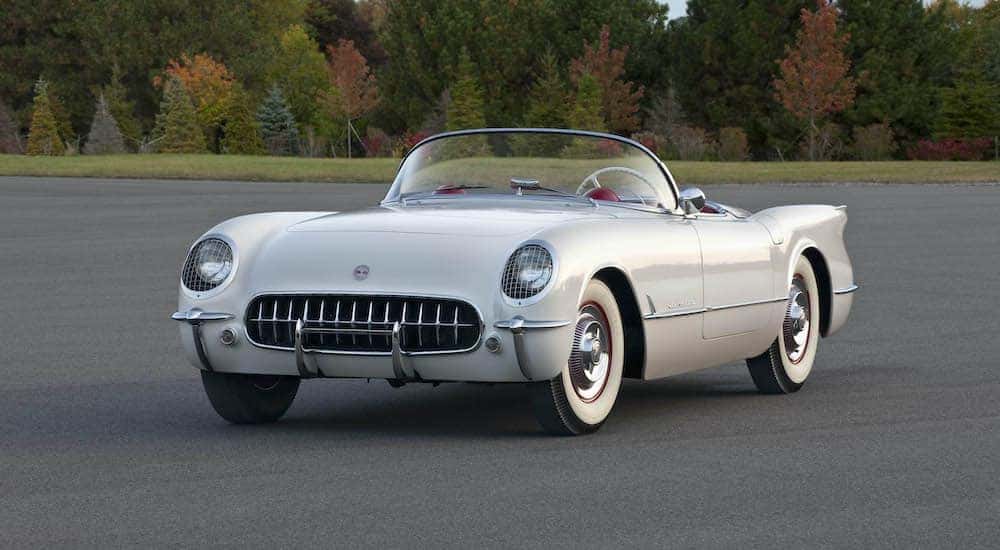
The very first Corvette that Chevy ever debuted was the C1, which appeared in 1953 at the Motorama Show in New York City at the Waldorf Astoria. This was the vehicle that caught the attention of engineer Zora Arkus-Duntov, who is sometimes called “The Father of the Corvette.” This beautiful little vehicle cost just under $3,500 at the time. It’s hard to imagine getting such a classic car, or any car, for that little. And even at the time, it was considered an excellent deal. In fact, it was what made the Corvette so popular. For the first time, Chevy made sports cars affordable to the general consumer. While the Corvette was a bit pricier than regular commuter cars at the time, it was significantly less expensive than its competitive sports vehicles.
1959
The year 1959 saw the release of the XP-87 Stingray Racer, which was designed by Peter Brock under the direction of Larry Shinoda. This Stingray boasted an incredibly powerful engine and impressive torque for its time. Today, it pales in comparison to where the Corvette has arrived, but when it came out, it was certainly turning heads.
1961
1961 brought us the Mako Shark Concept. It got its name due to its unique shimmery blue color and fin-like parts, making it look like a shark. This one was also designed by established GM designer Larry Shinoda, under the direction of the GM head of design.
The Mako Shark Concept certainly got people talking because it could reach a top speed of 120 mph—an incredible speed for an affordable vehicle. It boasted a powerful 7-Liter V8 engine and 425 horsepower. It had a nearly transparent top with interesting indentations in the roof, and eye-catching points throughout that made it look like it was moving through water even when sitting still.
Second Generation
1963 to 1967
Moving into the second generation, we got the C2 Stingray in 1963. This boasted a V8 engine with a horsepower range of 250 to 435, making it a powerful addition to the Corvette lineup. It was produced until 1967; however, a couple of years before it, we got the Mako Shark II Concept. This appeared at an auto show in New York in 1965 and boasted a high horsepower and that strong V8 engine.
Third Generation
1968 to 1983
The year 1968 gave us the Corvette C3, which would remain in production until 1982. It had unique features like concealed windshield wipers and headlights, along with certain signature aesthetic points appearing again later in the Corvette lineage. It’s also worth noting that during this third generation, in 1979, the world saw the most Corvette sales in the history of the vehicle.
1983
1983 ushered in the delivery of the C4, which would mark the first major redesign for the Corvette in 20 years. It had a sleeker profile with fewer major curves, a low-to-the-ground design, and a convertible top. This rendition of the Corvette would be produced until 1986.

Fourth Generation
1984 to 1996
The fourth generation of the Corvette rarely deserves its own section as very few changes occurred during these years, which were mostly a few engine upgrades. We got the ZR-1, which brought in the LT5 engine and 11-inch wheels, along with a top speed of 175 mph, but overall, it was a lull in the lineup.
Fifth Generation
1997 to 2004
The year 1997 was exciting for Corvette, as we got fresh blood in the C5, a thrilling car with a 5.7 Liter V8 engine that could go from zero to 62 mph in 5.3 seconds and reached top speeds of 175 mph. It also saw all-new styling and a revised gearbox placement.
2001
In 2001, we got the C5 Z06, a high-performance variant of the original C5. Considering the first C5 was already an impressive race car, the Z06 was something special. It had a 385 hp engine and weighed 54 lbs less than its predecessor, the fixed-roof coupe.
Sixth Generation
2005 to 2013
2005 brought in the C6, which represented another big redesign and the first since 1983. It featured redesigned bodywork and bold features like exposed headlamps, a larger engine, and a more spacious interior for comfort. By the year 2012, Corvettes made up over 30 percent of all sports car sales in the US.
2009
Chevy must have felt nostalgic in 2009 because they made their Stingray Concept based on the original 1959 racer. It debuted at the 2009 Chicago Auto Show and became so popular that it made its way into a movie franchise known for only featuring the best of cars—Transformers.
2013
Even though the Stingray Concept came out in 2009, behind the scenes, Chevy had been working on the Stingray C7 since 2007 and would put that out in 2013. Many years went into it, which was well worth it, as this beauty could reach a top speed of 180 mph and go from zero to 62 miles per hour in 3.8 seconds. It won several awards, had a stunning red interior option and a crisp digital gauge.
Seventh Generation
2014 to 2019
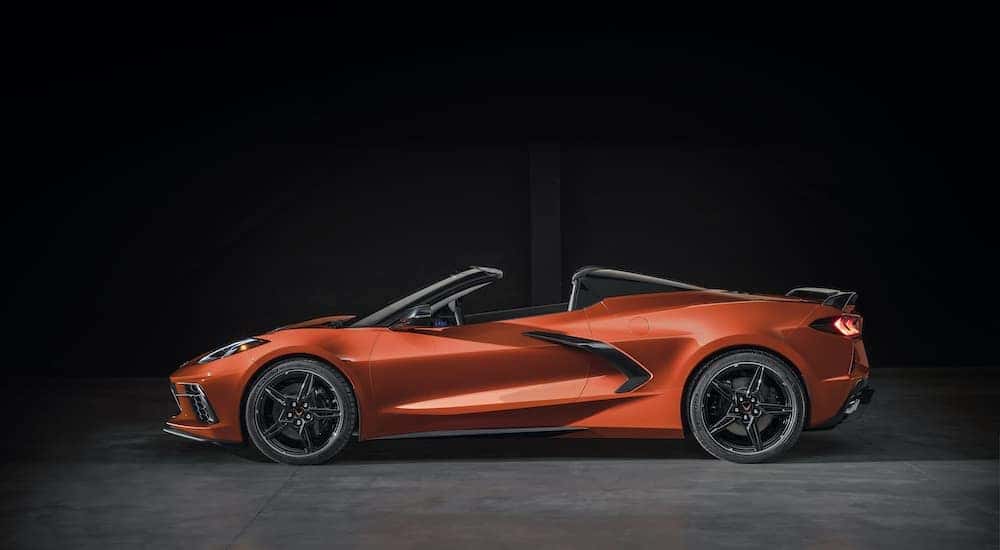
Between 2014 and 2019, the Corvette received many upgrades we still see today, like seven and six-speed automatic transmissions, optional exhausts, and supercharged engines. Massive horsepower gains were made, with up to 755 hp in the 2019 ZR1. This was the fastest Corvette to date, with a top speed of 212 mph. Finally, 2019 was also a big year because we saw the first mid-engine layout in a vehicle since the 1984 Pontiac Fiero. This came in the Stingray C8, which appeared at the Kennedy Space Center.
Eighth Generation
2020 to present
All of this led to the 2021 Z06, which presented the world with the most powerful naturally aspirated V8 engine to date and an impressive 670 hp. It could go from zero to 60 in 2.5 seconds.
2022
A Long-Running History In American Automotive Innovation
The 2022 Corvette came out with a 490 to 495 hp engine and breathtaking acceleration. Its Z51 model is capable of going from 0-to-60 mph in 2.8 seconds.
2023
Looking to the future, the 2023 Corvette can reach a top speed of 194 mph and go from zero to 60 in 2.9 seconds. Its starting MSRP is $64,200.[a] Corvette has come a long way since its original $3,500 offering in 1953, and we don’t see it slowing down, literally or figuratively, any time soon.
A Long-Running History in American Automotive Innovation
The Chevrolet Corvette has been an integral part of the fabric of American history. With each rendition, you can see style notes that were nods to fashion, architecture, and popular aesthetics of their time. Anyone with a need for speed can appreciate that Chevrolet made sports cars affordable for all with this fun sports car. It’s been worked on by some of the best automotive designers of our time and constantly sees exciting updates. We can’t wait to see what the next generation looks like. Hopefully, it doesn’t drive by so fast that we miss it.

0 comment(s) so far on The Corvette: A Timeline of Chevy’s Iconic Sports Car